There's a big debate going on about violent porn (i.e. porn that simulates violence, is consensually violent, or may in some cases actually depict rape). It's not a subject upon which I can claim any expertise, but one thing does strike me. There's an implicit assumption in the 'anti' brigade that all porn is inherently bad. This in turn leads me to suspect they want to ban all of it. This is just plain bonkers. Yes, bonkers about bonking - I went there and bought the tee shirt with the dubious slogan.
An obvious analogy - I'm enjoying the French drama series Les Revenants (The Returned) on Channel 4. When I watch it online using 4OD I am informed that it's not suitable for younger viewers. I get the same message when I watch some fairly innocuous comedy on the BBC iPlayer. When I watch Scandinavian crime series like Arne Dahl I get a warning that they include not only violence but also naughty language, even though the latter is only found in the subtitles unless you speak Swedish. (Is it better or worse to read the word 'fuck' at the bottom of the screen, as opposed to hearing it?)
None of the above shows is pornographic, though between them they include sexually explicit language and images. Few people today think such entertainment made for adults should be banned or censored. Once, they did, and films that were deemed offensive didn't get shown in some towns because the local council did indeed ban them. The same went for books, which is why businesses like Olympia Press were created. It seems that whenever any medium achieves a high level of saturation - books (courtesy of state education), then cinema, then television, now the internet - there's a moral panic over its supposedly corrosive influence. And yet society survives relatively unscathed.
Perhaps a more sensible campaign would be to try and promote better porn, though perhaps the official term should be erotica or something. So my solution is to give the BBC and C4 - both recipients of public funding, one way or another - to create high quality erotic TV. The fact that this would give numerous MPs, newspaper editors, and clergy apoplexy is a fringe benefit. Also, I quite like the idea of tuning in to the unexpurgated edition of The Archers at bedtime. 'That's a mighty big silage clamp you've got there, Ed.'
I'm not sure what sort of disorder - mental, physical, or moral - can be at the root of this.
A postman’s deliver-wees to one couple left them horrified – after he repeatedly urinated on their doorstep.
The Royal Mail worker regularly relieved himself outside the home of Luke Osborne, 27, and partner Keyleigh Rawlings, 23.
The couple thought drunks were to blame for the puddles but when they began to suspect the postie, Luke hid in the hall to catch him in the act.
Why didn't he use one of those little red elastic bands, I ask myself? Which says a lot about me.
Another thing struck me about this vignette of modern British life, though. Mr Osborne said: 'This is the Royal Mail, they deliver in the Queen’s name and there he was having a wee on my front step.' True, but I don't think the Queen vets applicants for the service in person.
Also, the Royal Mail is going to be privatised soon, and it will therefore end up as just another corporation. So rapacious, profit-driven free enterprise, not a modified form of feudalism, will be piddling on our doorsteps ere long.
A brilliant writer of fantasy, science fiction, and horror, Matheson was one of the handful of fiction writers who helped shape modern culture simply by telling great stories. And he didn't do young Stevie Spielberg any harm, by providing him with a brilliant script for his first film...
In Philip Larkin's poem 'Going, Going...' the grumpy old bastard of English letters talks about environmental degradation (a term he would never have spoken in real life, or at least without raising an eyebrow in contempt). The poem is about the rampant housing development of Sixties Britain, which saw the bloating of suburbs and - occurring simultaneously with industrial-scale agri-business - destroyed much of the old countryside. The familiar seaside resort also went into a long decline as cheap package holidays caught on. For Larkin this was the loss of the 'green and pleasant land' of his childhood. He was not pleased, and he reflected that he and others had arguably been complacent about warnings about the destruction of the nation's green heritage from people like his friend and rival John Betjeman.
I knew there’d be false alarms
In the papers about old streets
And split level shopping, but some
Have always been left so far...
In conclusion, Larkin tries to reassure himself with 'Most things are never meant./This won’t be, most likely''. (That use of meant, implying so much of planning, fate, and negligence, is typical of the man's sly genius.) But what made me think of 'Going, Going...' was how much smaller and simpler Larkin's problem was when considered in the light of the End of the World as We Know It.
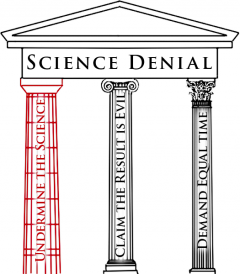
So, there's a World Bank Report that, in summary, says Asia will Drown, Africa will Starve in 30 years. Put another way, all the stuff that's already happening will happen more often, and more intensely, and hurt a lot more people. The denialist response to this is to try and trash the science, which - as climate change becomes more obvious - will work progressively less well. But so long as there's good money in it, they'll keep on doing it. Science denial is insane, collectively speaking, but must often be very profitable at a personal level.
A common denialist canard from a few years ago (don't see so much of it now) is the claim that the Greens who want to curb CO2 emissions are racists (by implication) because they want to deny the world's poor people a Western living standard. 'Why do think you're entitled to cars and fridges and plasma TVs if you insist Africans and Chinese can't have them?' Oh, how clever they thought themselves, attacking liberal lefties for being all fearfully racist. How the well-born and expensively-educated must have giggled over dinners worth more than a month's income for one of the Africans they pretended to care about.
Well, the obvious answer is that you can't watch TV when you're dead (given our current state of technology). And that inability to enjoy Gossip Girl in the grave is very relevant to Westerners, because anyone who thinks mass flooding and starvation won't affect the entire word in very bad ways is an idiot. Today's problems with displaced populations are a minor appetiser compared to what is coming - a Wandering of the Nations on a scale never seen before.
Never before in the history of the world had such a mass of human beings moved and suffered together. The legendary hosts of Goths and Huns, the hugest armies Asia has ever seen, would have been but a drop in that current. And this was no disciplined march; it was a stampede--a stampede gigantic and terrible--without order and without a goal, six million people unarmed and unprovisioned, driving headlong. It was the beginning of the rout of civilisation, of the massacre of mankind.
The fact that a simple message is being consistently rejected or garbled isn't because of a lack of scientific consensus, or because boffins are making stuff up to get research grants, or because Zionist lizard people from the earth's core are running the UN. It's largely because newspapers in Britain and other countries are essentially vanity publishing projects for rich old men, and as such wildly out of tune with except the rich old men and their hangers-on. The right-wing press constantly laments the failure of the British people to be right-wing enough, not seeing itself for the cabal of bought-and-paid for arselickers it so obviously is. But they still do plenty of damage. They run interference, as the trendy folk say.
The reason we should reduce our own energy use and try to curb fossil fuel use in developing countries is because if we don't hang together we will surely hang separately. Not easy, but it's important to get it done. Otherwise that nice Mr Patel and Mrs Patel and all the little Patels probably won't get to enjoy air conditioning, home cinema, and a Mercedes SUV. They won't enjoy them because most of them will die in a flood, or a famine, or a plague, or a war - with or without nukes. And if any of them survive they will end up in a stinking refugee camp, quite possibly in Sussex.
It might not happen, of course. By the same token, if you play Russian Roulette for ten minutes, you might not blow your brains out. If you let your children run into rush hour traffic they may grow up to be sound in wind and limb. At this very moment an inventor in a garden shed in Rotherham, or a white-coated team of nanotech types in Osaka, might be inventing the Amazing Thing That Solves The Problem. Slightly less improbably, the convergence of many new and old technologies combined with good political ideas might stave off the worst of it.
Might.
Well, the next time some renowned expert starts to explain that the future will be a race for global dominance between India and China, excuse me if I change the channel. Or maybe go to the park and read poetry in the sunlight.